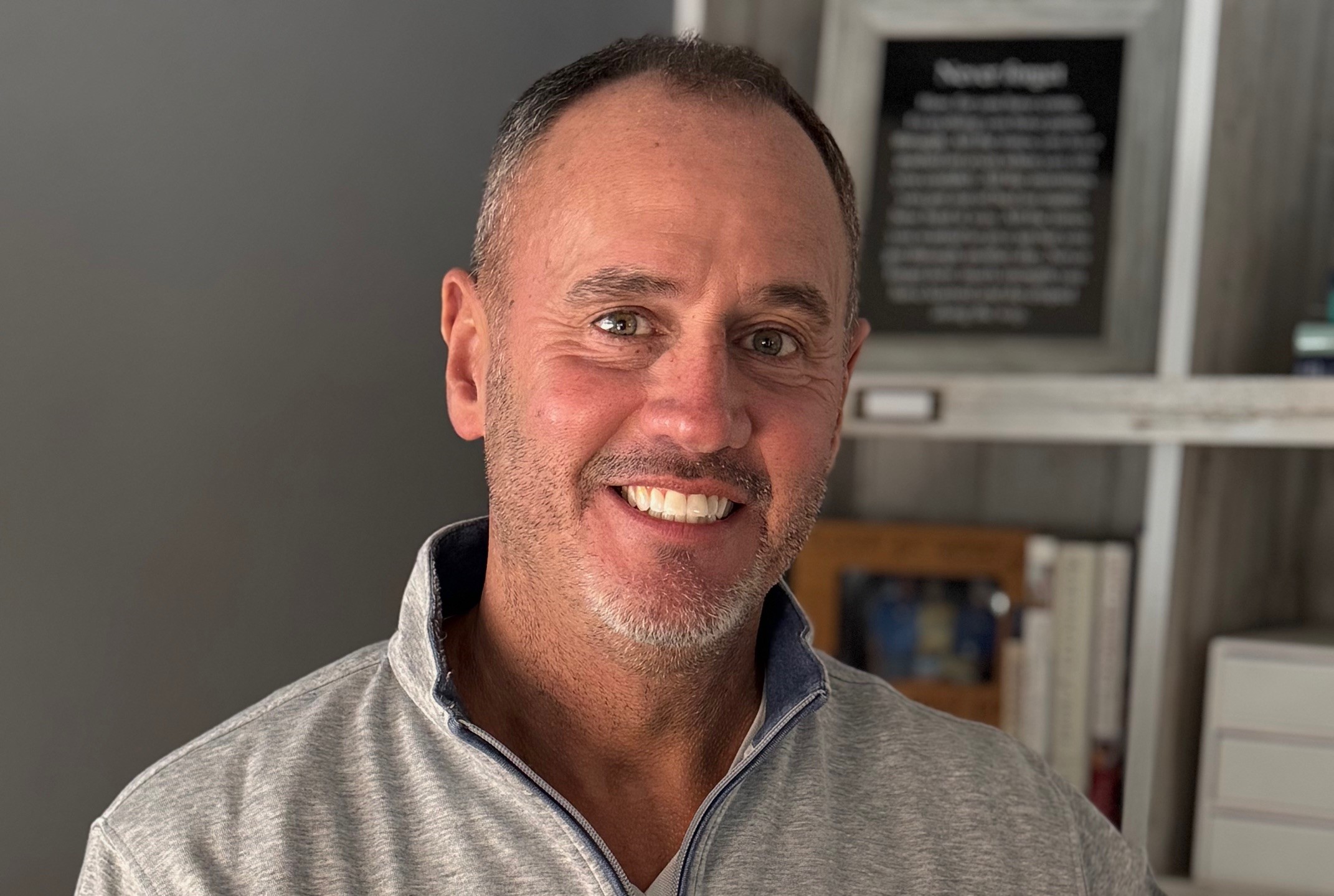
Keith Bellizzi is a professor of gerontology in Human Development and Family Sciences here at UConn. He has spent the last two decades studying resilience, cancer survivorship, healthy aging, and behavioral change. Keith recently published a new book entitled “Falling Forward: The New Science of Resilience and Personal Transformation.” Bellizzi was diagnosed with cancer in his early 20s and has faced the disease four times. The book explores how experiences can change the terrain of one’s life and how you move forward on different ground. Keith takes a look at the topic of resiliency and what it means today and how it is perceived differently in previous decades. It’s not pushing through and being tough all the time, but more about vulnerability and honesty. Keith also talks about living longer in a healthy way and what caretakers for the elderly need to do to keep their own piece of mind.
Listen to Episode 156 on Podbean
Mike: Hello, everybody. Welcome to another episode of the UConn 360 Podcast. It’s Mike Enright from University Communications, along with Izzy Harris from University Communications. Izzy, it’s been cold out.
Izzy: I know — I was just saying that — but you think it’s warmer today.
Mike: I thought it was warmer yesterday, Tuesday. But, you know, we’ve had Groundhog Day; spring training begins pretty soon, so spring’s coming.
Izzy: I don’t know. Phil says otherwise.
Mike: Well, as long as spring training’s coming in baseball, that’s a sign that spring’s going to make it eventually.
Izzy: I don’t know. I have a bone to pick with Phil. I was not happy with his winter prediction.
Mike: Well, we’re getting there. We’ll get there.
Izzy: I guess.
Mike: But we have a good guest today — that’ll warm up the podcast.
Izzy: Oh, absolutely.
Mike: So, Dr. Keith Bellizzi is a professor of gerontology in our Department of Human Development and Family Sciences. He’s spent the last two decades studying resilience — which can mean different things to different people — and he looks at it a little differently. He’s also a cancer survivor, and he’ll talk a bit about that. He studies healthy aging and behavior change. He’s got a new book out — it’s on Amazon; we’ll put a link in the podcast description. It’s called Falling Forward: The New Science of Resilience and Personal Transformation. It explores how experiences can change the terrain of one’s life, and how you can move forward on different ground. He earned his undergraduate degree from Quinnipiac, his master’s from Central Connecticut, and he has a doctorate from UConn. So, Keith, welcome to the UConn 360 Podcast.
Keith: Thank you, Mike. Thank you, Izzy. Glad to be here.
Mike: Your new book focuses on the trait of resilience. Sometimes when we hear “resilience,” we think toughness — “I have to beat it,” all that kind of macho stuff. Tell us a little about your personal journey, and how you understand resilience.
Keith: Thank you. Believe it or not, I never planned to become a researcher or an academic. My undergraduate degree was in business, and my first job out of college was at an insurance company — of course, where else do you work when you live in the insurance capital of the world? That all changed in my early twenties when I was diagnosed with cancer — at a time when the world was supposed to be opening up, but mine was narrowing down. While my friends were starting careers and families, I was forced to navigate a whole new world with complicated medical jargon and alien‑like imaging machines. I was scared, angry, and uncertain about my future. What sustained me during that time wasn’t grit or toughness or relentless positivity in the way we often think about resilience. It was relationships, it was finding ways to reclaim a sense of control, and it was learning to adapt when the old version of my life no longer fit. That diagnosis forced me to confront my mortality, and I realized I wanted something more out of life. It was no longer about making money or accumulating material things. I began to see significant gaps in the healthcare system, especially for young adults with cancer. So I made a promise: if I survived, I’d quit my job, go back to school, and dedicate my life to helping others facing cancer.
Izzy: Thank you so much for sharing some of your story with us. It’s inspiring to hear that you took your personal experiences and wanted to make a difference — going from insurance to something completely different. I’m aware you’ve written a book that draws on your personal life and also your academic career. How do you balance those two in Falling Forward?
Keith: The book Falling Forward brings together my lived experience as a four‑time cancer survivor with nearly two decades of research on resilience — specifically, how people adapt and grow through adversity. In academia, we spend a lot of time writing grants, conducting research, and publishing results — but that work doesn’t always get into the hands of the people it’s meant to serve. So the book came from two motivations. First, I wanted to put the science in the hands of people who may be struggling, in a way that’s practical and meaningful. Second, I wanted to tell my three daughters the full story of my journey — not just the highlight reel. I wanted them to understand the uncertainty, the setbacks, and the struggles.
Mike: You talk a lot about vulnerability as a key to resilience. As a child — especially a male child of the ’60s — vulnerability was considered a weakness, while resilience was a strength. How does vulnerability make you resilient?
Keith: Absolutely — and you touched on something important: what society has taught us about resilience. Most of us were taught that being resilient means pushing through, being tough, staying positive all the time, and not showing your cracks. Vulnerability asks something different — and harder: to be honest about the fear and uncertainty we might be experiencing. That can feel risky and uncomfortable, especially in a culture that rewards toughness. But in acknowledging fear, we create space for real connection, growth, and adaptation. In Falling Forward, I argue that resilience isn’t about enduring alone. It’s about having the courage to be seen, to ask for help, and to move forward more whole because of it.
Izzy: Your academic work at UConn focuses a lot on healthy aging. As we live longer, what’s the key to also being healthy in advanced age?
Keith: That’s the million‑dollar question. There’s a lot of attention right now on the anti‑aging movement. But living longer, from my perspective, really only becomes a gift if those extra years are lived with meaning, connection, and adaptability. The research on healthy aging is clear: it’s not just about avoiding disease; it’s about taking care of your body and, importantly, staying engaged with people, purpose, and life itself. These things matter as much as any medical advance. I recall about 15 years ago, I was working out at a local gym. There was an older gentleman in his early eighties — a retired postal carrier — and he always worked out with the younger kids there. I asked him the secret to a healthy life. His response still resonates: “I’d rather wear out than rust out.” Meaning: stay active, physically and cognitively.
Izzy: It’s always inspiring when you see people like that. My grandmother was an expert bridge player — the card game — and that’s how she kept her mind in tip‑top shape. She lived until she was 94, and throughout the very end, she never lost it. Always witty, always on top of it, and she swore that bridge and word games kept her sharp.
Mike: Crossword puzzles, too — right?
Izzy: Yes! Do you do the crossword puzzle every day?
Mike: I do a crossword puzzle every Sunday.
Izzy: Oh, every Sunday, okay. I play other various games.
Mike: I’ve heard various games—
Izzy: I’ve heard that’s also good for brain stimulation.
Keith: Yes — staying active in whatever you’re passionate about. And sometimes as you age, you have to make adjustments. If you enjoyed golf and can’t golf anymore, there may be other things you can do — like swimming. Being adaptive as you age, and able to pivot, is extremely important.
Mike: One thing a lot of people go through — it’s not only older adults who experience stress, but also the caregivers and people looking out for them. There are a lot of responsibilities. Do you have tips for caregivers taking care of someone in their eighties or nineties?
Keith: Certainly. Caregiving isn’t my main area of specialty, but through my work I’m familiar with it — and I’m also a caregiver to my mother, who is 86 and has dementia. Caregiving can be deeply meaningful, but it can also be exhausting. Studies often show caregivers report higher levels of distress, anxiety, and depression than the care recipient — because they’re balancing multiple roles. One of the most important things a caregiver can do is give themselves permission to pause — to reset, step back, ask for help, and acknowledge their own limits without feeling guilty. Staying connected to others, even in small ways, and carving out brief moments of restoration can make a real difference. Peace of mind doesn’t come from doing everything alone; it comes from recognizing that caring for yourself isn’t selfish — it’s an essential part of caring well for someone else.
Izzy: When you talk about adaptability within resilience, it sounds like this applies to caregiving, too. When you’re the caregiver, you can feel burdened — and it’s important to adapt for yourself, change things, and adjust your social life. It’s interesting that it carries into both aspects.
Keith: Absolutely. When we talk about resilience, we often think about the stressors we’re dealing with — but there are others involved. The skills and ideas I talk about in the book certainly apply to family members caring for a loved one.
Izzy: Going back to your resilience work — you’re part of the Cancer Survivorship Research Program. Can you tell us what that group does?
Keith: Sure. The Cancer Survivorship Research Program brings together researchers, clinicians, and community partners to better understand what life looks like after cancer. Our work focuses on the long‑term physical, emotional, and social challenges survivors face — and, just as importantly, on identifying strategies that support quality of life, resilience, and healthy aging across the survivorship journey.
Mike: We’re always interested when we have different guests on the UConn 360 Podcast. You teach, you’re a researcher, you’re a dad, you’ve got your medical care. When you have some free time, what do you like to do?
Keith: I wish I had more free time. But when I’m not working, I try to practice what I preach. I love being in nature — I’ll be out in the woods hiking or biking. I love to travel; travel provides perspective. I write quite a bit — writing remains a creative outlet for me. And I spend time with my family, my three beautiful daughters. That’s what grounds me and brings joy to my life.
Mike: That’s great. There’s nothing like kids — nothing like kids. So, Keith, thank you so much for joining us here on the UConn 360 Podcast today. Very interesting work. Again, his book is available on Amazon — there’ll be a link in the podcast description. And Izzy, stay warm.
Izzy: I’ll try my best.
Mike: Sounds good. Thanks for joining us today on the UConn 360 Podcast. We’ll catch you next time.