Tag: Historic Happenings

Episode 55: The Great Storrs Air Raid

This week, Prof. Lucy Gilson stops by to talk about why business and research are a natural fit; we learn about how the Guerrilla Girls changed the art world for the better; and we look back on a very patriotic series of fires on the Storrs campus. Transcript Tom Breen: [00:00:00] Hello everyone, and welcome […]

Read more

Episode 52: The Future of Our Brains

This week, UConn philosopher Susan Schneider tells us about some of the possible benefits (and some of the potentially terrifying downsides) to artificial intelligence; Daniel Burkey, associate dean in the School of Engineering, explains how the school became a nationally-lauded model of student diversity; and we learn about two incidents in 1960 that involved flags […]

Read more

Episode 49: Wrapping Up 2019 With a Bright Blue Bow

This week, the gang takes stock of the year just about to pass, plays back some of our favorite stories, and learns about the antediluvian ancestor of UConn 360 itself. Transcript Tom Breen: Hi everyone. You’re hearing the sound of brass and not sleigh bells, but it’s still the holiday time of year here at […]

Read more

Episode 47: Raised on Promises

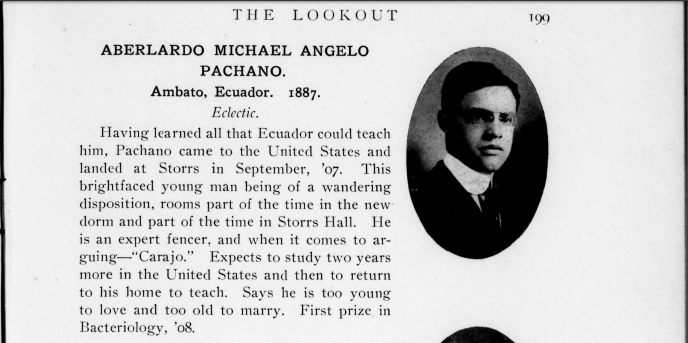
This week, we meet the two UConn-trained historians behind the popular “American Girls” podcast; learn about crucial research into the causes of child neglect; and discover the identity of the University’s first-ever international student.

Read more

Episode 46: UConn’s Other Basketball Powerhouse

This week, Julie talks with members of the basketball team organized by the UConn chapter of the Chinese Students and Scholars Association about their winning ways; Ken gets us ready for the visit by the National Symphony Orchestra of Ukraine’s visit to the Jorgensen Center for the Performing Arts; and Tom tells us about the […]

Read more

Episode 45: Our Milkshake Brings All the Ghosts to the Yard

This week, Student Podcast Assistant Extraordinaire Maxine Philavong takes the reigns for a spooktacular Halloween episode. She interviews UConn students about their costume choices, and provides a feature on UConn’s Horror Club. We wrap up this excursion into terror with a rundown of historic Halloweens at UConn, and ponder the mystery of the “milkshake dance.”

Read more

Episode 44: Don’t Send in the Clowns

This week, Political Science Professor David Yalof gives us some insights into the history of impeachment in Washington, D.C.; Astronomy Professor Jonathan Trump tells us some awe-inspiring facts about black holes; and we relive the night when North Campus was convulsed by panic over rumors of sinister clown-related activity.

Read more

Episode 43: How Not to Break the Law

This week, Mike Chase ’11 (LAW) tells us about his runaway success as the author of a book offering pointers on very specific federal crimes; Adjunct Professor Matt DeBacco ’07, ’11 MS, ’14 MS talks about a unique class on the horticulture of cannabis; and Tom gives us some background information on why we shouldn’t […]

Read more

Episode 41: The Land of Steady-ish Habits

This week, Tom has gone walkabout, so Julie and Ken step up with a history-heavy episode. Professor Altina Waller stops by to tell us about the continuing fascination of the Hatfield-McCoy feud, while state historian Professor Walter Woodward provides insight on everything from how Connecticut’s past and present line up with each other to what […]

Read more

Episode 38: Talking Trash (But In a Scholarly Way)

This week, Karen McDermott, who recently completed her doctoral dissertation, drops by to tell us about her research into whether trash talk can really affect the outcome of an athletic competition; Emeritus Prof. Nicholas Bellantoni reflects on his career as Connecticut’s answer to Indiana Jones; and we learn about a campus event from 1972 that […]

Read more

Our websites may use cookies to personalize and enhance your experience. By continuing without changing your cookie settings, you agree to this collection. For more information, please see our University Websites Privacy Notice.

What are cookies?

Web cookies (also called HTTP cookies, browser cookies, or simply cookies) are small pieces of data that websites store on your device (computer, phone, etc.) through your web browser. They are used to remember information about you and your interactions with the site.

Purpose of Cookies:

  1. Session Management:

    • Keeping you logged in
    • Remembering items in a shopping cart
    • Saving language or theme preferences
  2. Personalization:

    • Tailoring content or ads based on your previous activity
  3. Tracking & Analytics:

    • Monitoring browsing behavior for analytics or marketing purposes

Types of Cookies:

  1. Session Cookies:

    • Temporary; deleted when you close your browser
    • Used for things like keeping you logged in during a single session
  2. Persistent Cookies:

    • Stored on your device until they expire or are manually deleted
    • Used for remembering login credentials, settings, etc.
  3. First-Party Cookies:

    • Set by the website you're visiting directly
  4. Third-Party Cookies:

    • Set by other domains (usually advertisers) embedded in the website
    • Commonly used for tracking across multiple sites
Authentication Cookies

Authentication cookies are a special type of web cookie used to identify and verify a user after they log in to a website or web application.


What They Do:

Once you log in to a site, the server creates an authentication cookie and sends it to your browser. This cookie:

  • Proves to the website that you're logged in
  • Prevents you from having to log in again on every page you visit
  • Can persist across sessions if you select "Remember me"

What's Inside an Authentication cookie?

Typically, it contains:

  • A unique session ID (not your actual password)
  • Optional metadata (e.g., expiration time, security flags)
Analytics Cookies

Analytics cookies are cookies used to collect data about how visitors interact with a website. Their primary purpose is to help website owners understand and improve user experience by analyzing things like:

  • How users navigate the site
  • Which pages are most/least visited
  • How long users stay on each page
  • What device, browser, or location the user is from

What They Track:

Some examples of data analytics cookies may collect:

  • Page views and time spent on pages
  • Click paths (how users move from page to page)
  • Bounce rate (users who leave without interacting)
  • User demographics (location, language, device)
  • Referring websites (how users arrived at the site)
Opt Out

Here's how you can disable cookies in common browsers:

1. Google Chrome

  • Open Chrome and click the three vertical dots in the top-right corner.
  • Go to Settings > Privacy and security > cookies and other site data.
  • Choose your preferred option:
    • Block all cookies (not recommended, can break most websites).
    • Block third-party cookies (can block ads and tracking cookies).

2. Mozilla Firefox

  • Open Firefox and click the three horizontal lines in the top-right corner.
  • Go to Settings > Privacy & Security.
  • Under the Enhanced Tracking Protection section, choose Strict to block most cookies or Custom to manually choose which cookies to block.

3. Safari

  • Open Safari and click Safari in the top-left corner of the screen.
  • Go to Preferences > Privacy.
  • Check Block all cookies to stop all cookies, or select options to block third-party cookies.

4. Microsoft Edge

  • Open Edge and click the three horizontal dots in the top-right corner.
  • Go to Settings > Privacy, search, and services > cookies and site permissions.
  • Select your cookie settings from there, including blocking all cookies or blocking third-party cookies.

5. On Mobile (iOS/Android)

  • For Safari on iOS: Go to Settings > Safari > Privacy & Security > Block All cookies.
  • For Chrome on Android: Open the app, tap the three dots, go to Settings > Privacy and security > cookies.

Be Aware:

Disabling cookies can make your online experience more difficult. Some websites may not load properly, or you may be logged out frequently. Also, certain features may not work as expected.